
Practical6 min read
Travelling to Nairobi for medical treatment: what to arrange first
Nairobi draws patients from across East Africa and beyond. A checklist for the parts of the trip that are not the treatment — paperwork, money, and where to stay.
Nairobi is where a large part of East Africa comes for specialist care. The hospitals in and around Upper Hill take patients from Uganda, Tanzania, Rwanda, South Sudan, Somalia and Ethiopia, and increasingly from further afield, because the expertise here is real and the cost is a fraction of Europe or the Gulf.
The medical side you will arrange with your hospital. This is about everything else — the parts that are nobody’s job and cause most of the difficulty.
Before you travel
- Get the hospital’s letter early. An appointment confirmation or letter of invitation makes immigration, insurance and sometimes the entry application considerably smoother.
- Apply for entry in good time. Kenya uses an electronic travel authorisation now — see entry requirements. Medical cases often involve companions on separate applications and longer stays, so leave more room than a tourist would.
- Ask the hospital what it needs in advance. Prior imaging, test results, referral letters, a list of current medication with generic names rather than brands.
- Confirm how payment works. Deposits, insurance pre-authorisation and what is settled on the day vary between hospitals and are worth knowing before you land.
Book accommodation for longer than the treatment is scheduled to take, and make sure extending is possible. Discharge dates move — almost always later. Arriving to a fully booked city in week three is a problem nobody needs on top of the rest.
Where to stay, and why it matters more than usual
The single most useful property of a place to stay during treatment is that you can walk to the hospital. Not drive — walk. Nairobi traffic turns a two-kilometre journey into forty minutes at the wrong hour, and during a hospital stay you will make that journey at every hour there is.
After proximity, the things that matter are a kitchen, laundry, and somewhere to sit that is not a bed. We wrote about that at length in staying near the Upper Hill hospitals, which is the companion piece to this one.
Bringing someone with you
Most patients travel with a companion, and the companion’s week is the one nobody plans. They are the person doing the pharmacy runs, the laundry, the phone calls home and the eating badly. Somewhere with a kitchen and a door that closes does more for them than anything else on this list.
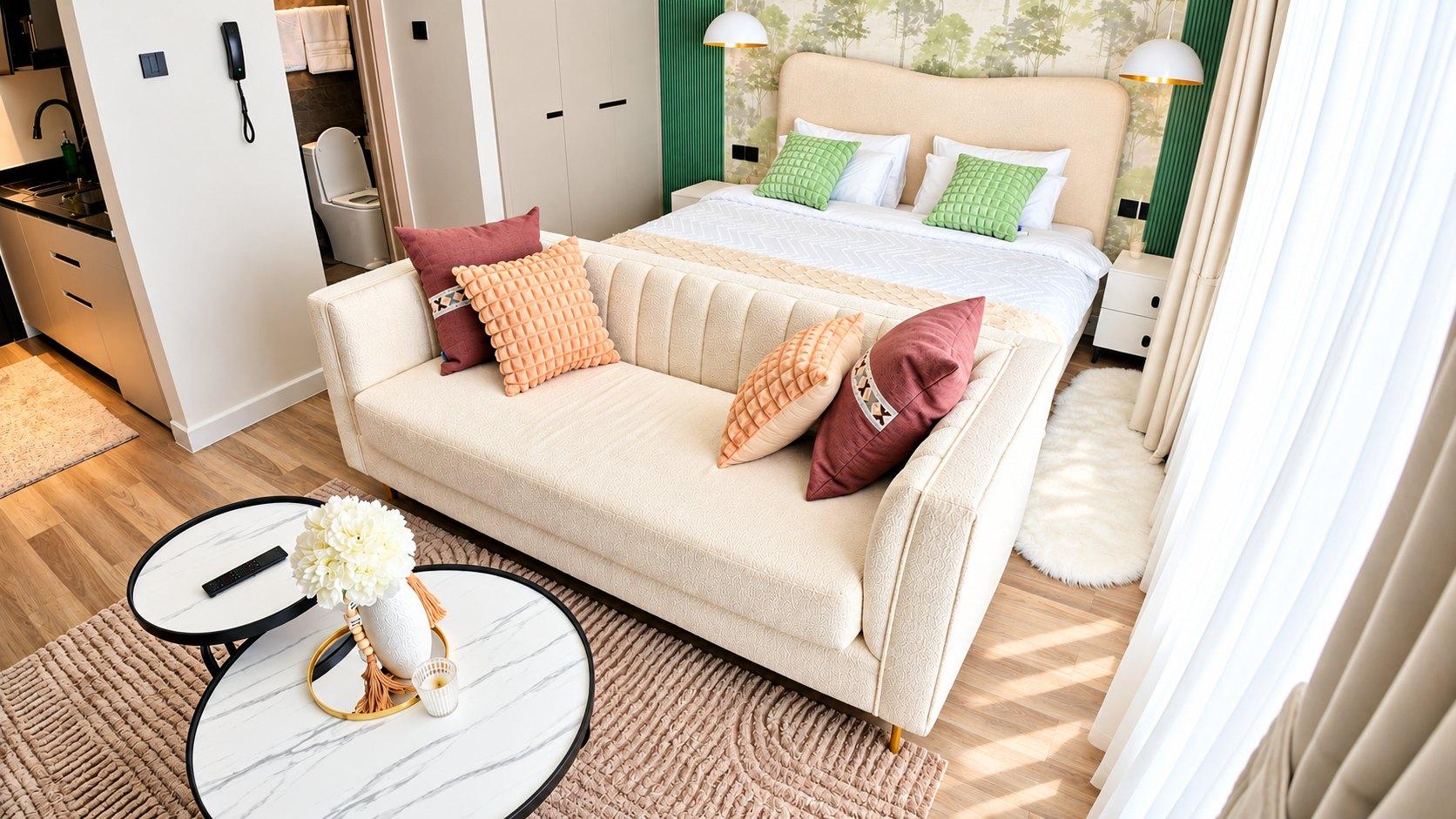
Bear in mind that a studio takes two people. Larger families usually take two apartments or rotate — worth raising early rather than discovering at check-in.
Money and communication
- A Kenyan SIM on day one. Every hospital call, taxi and delivery runs through it.
- M-Pesa for daily life, cards for the hospital. The hospitals take cards and insurance; the pharmacy round the corner may prefer mobile money. Both are covered in money in Kenya.
- Keep every receipt. Insurers and employers ask for them, and reconstructing a month of costs afterwards is miserable.
Looking after yourself
Nairobi sits at 1,800 metres and the evenings are cooler than most people expect — bring something warm, particularly for long hours in air-conditioned waiting rooms. Eat properly when you can. And if there is an afternoon where you are not needed, take it: there is a national park fifteen minutes away, and a few hours of something else is not a betrayal of anybody.