
Staying longer6 min read
Monthly and corporate stays in Nairobi: what to know before you commit
Relocating, on secondment, or between homes? What a month-plus stay in Nairobi actually involves — the questions to ask, and what an invoice needs to say.
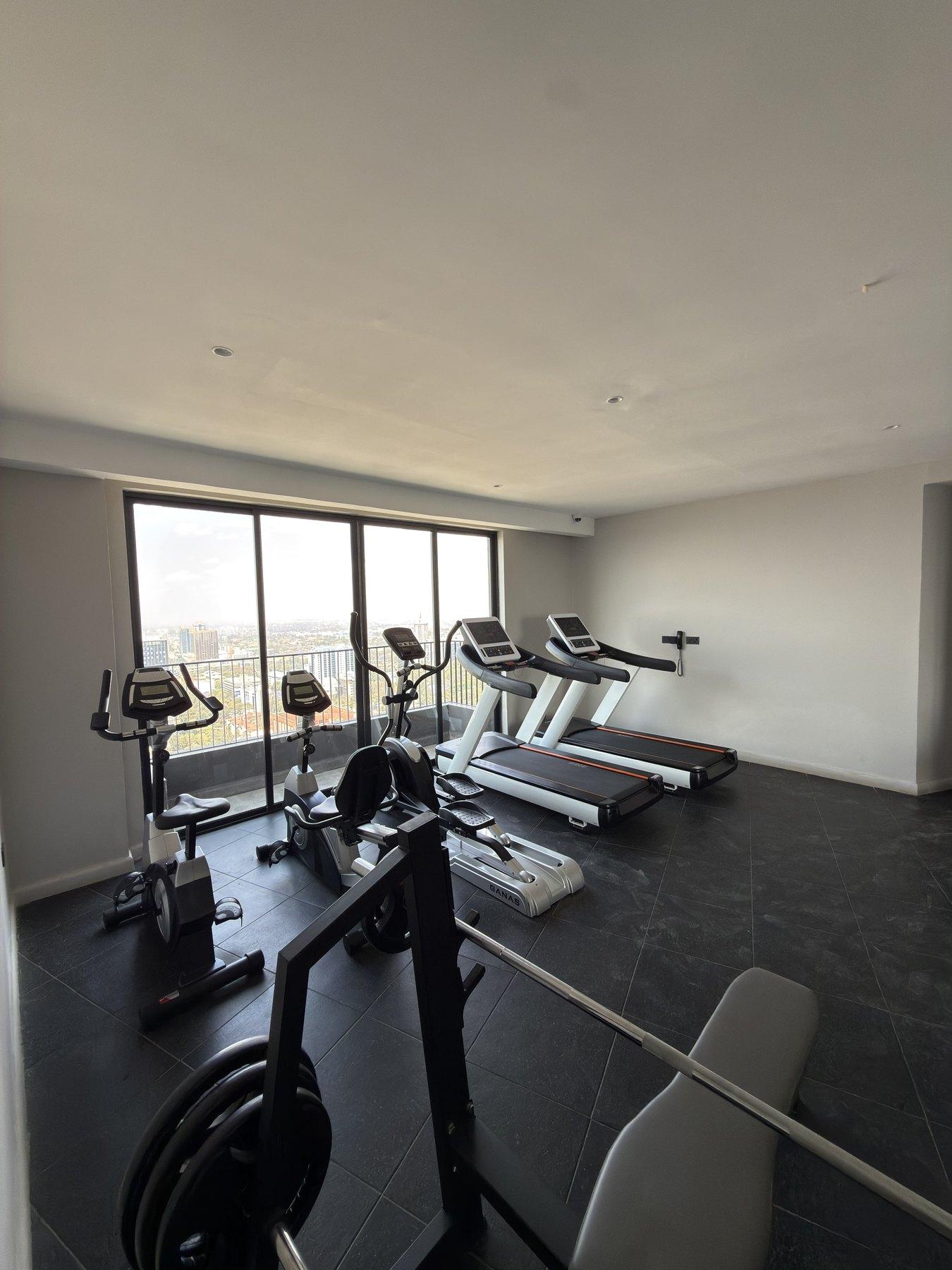
There is a particular kind of Nairobi stay that is neither a trip nor a move: a secondment, a project, a relocation before the permanent flat is found, a few months of covering a role. Long enough that a hotel is absurd, short enough that a lease is worse.
Serviced apartments exist for exactly this, and the questions worth asking are different from the ones you would ask about a holiday let.
Ask what is actually included
“Serviced” is not a regulated word. It means very different things at different prices, and the gaps are where the arguments happen.
- Housekeeping — how often? Daily, weekly, or on request. Whether it includes a change of linen and towels, and whether that is extra.
- Utilities. Whether electricity, water and internet are in the rate or metered. On a month-long stay a metered bill is a meaningful sum.
- Laundry. A machine in the apartment is not the same as a laundry service, and neither is the same as a laundry bill.
- What happens when something breaks. Who you call, and how quickly somebody comes.
The building matters more over a month
On a three-night stay you might never notice the generator. Over eight weeks you will notice everything: how reliable the water is, whether the lifts queue at eight, how the internet behaves during an outage, whether the security at the door actually knows who lives there.
Ask about backup power, water storage, lifts and access control before anything else. We go through why in choosing a neighbourhood — the building often matters more than the district.
Where you stay for a month should be chosen around the journey you make every single day. Twenty extra minutes each way is roughly two full days of your life over eight weeks, spent in a car.
Paperwork, if someone else is paying
Corporate stays run on documentation, and this is where small operators often disappoint. Worth confirming up front:
- A proper invoice with the company as the addressee, not a payment confirmation with a guest’s name on it.
- Dates and nightly rate itemised, because finance teams reconcile against approved travel, not totals.
- Extensions as their own line. An extension folded silently into the original booking is very hard to expense.
- Something to show for the entry application, if the traveller is arriving from abroad — see entry requirements.
We keep extensions as separate bookings for exactly this reason: initial nights and extended nights stay separately visible and separately payable, which is what an accounts department needs.
Booking length, and leaving room
Projects slip. Almost every long stay we take is extended at least once, and the ones that go wrong are the ones booked for exactly the planned duration in a city that then filled up.
Book what you are confident about, and satisfy yourself that extending is genuinely possible rather than theoretically possible. That means asking how it works, not whether it is allowed.
What about a lease?
Beyond about three months, a conventional let is usually cheaper — and comes with a deposit, a furniture problem, utility accounts in your name, and a notice period. For anything under a quarter, the arithmetic rarely favours it once you count the setup.
The middle case — two or three months while you look for somewhere permanent — is precisely what a serviced apartment is good at, and the comparison with hotels covers the rest of the reasoning.